
IT Management
The Top IT Challenges Facing Australian Manufacturing SMBs in 2025

Manufacturing in Australia contributes 6% to the national GDP and employs over 850,000 people, according to the Australian Manufacturing Workers’ Union. As the world of trade gets smaller and more competitive, with technological advancements, manufacturers not of the large corporation persuasion are grappling to stay on the map.
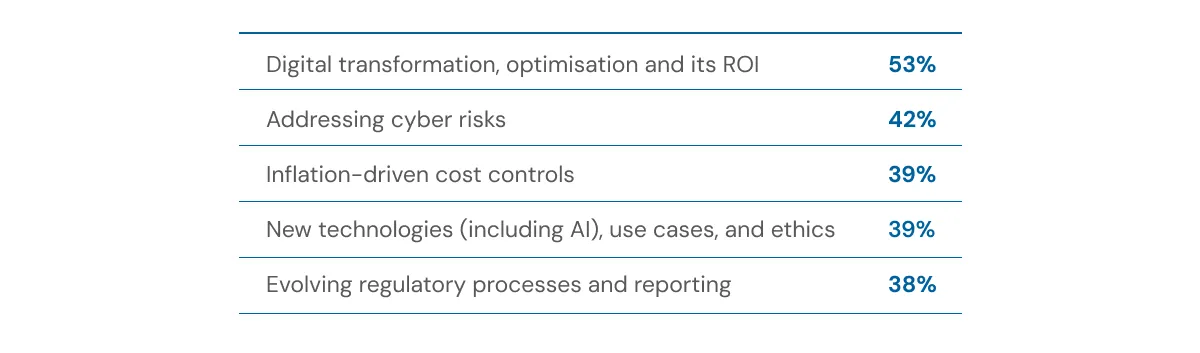
Digital transformation has shifted from a competitive advantage to a survival imperative. In 2025, 53% of Australian business leaders identified it as their top challenge, surpassing cyber risks, inflationary pressures, and AI ethics. For manufacturers, this reflects a growing reliance on IT to ensure uptime, drive efficiency, and integrate systems across complex supply chains. As this reliance deepens, so, too, do the risks and challenges, especially for small and medium-sized businesses (SMBs). This blog examines the top IT challenges facing our smaller Australian manufacturing sector, offering insights into how companies can proactively address them.
Key IT Hurdles for Australian Manufacturers
Unlike office-based businesses, manufacturers must contend with harsh physical environments, multi-site connectivity needs, and specialised operational technology (OT) such as programmable logic controllers (PLCs) and industrial control systems (ICS). These are foundational to production lines but often isolated from mainstream IT infrastructure, making visibility, integration, and support more difficult.
While large manufacturers often have dedicated IT teams, SMBs struggle to compete on the same stage. Limited internal resources lead to reactive support models that can’t keep up with rising risks and downtime costs. Addressing this imbalance requires IT solutions specifically designed for manufacturing environments, with deep insight into system interoperability, 24/7 uptime, and security across the entire production floor.
The Top 5 Challenges for Australian Manufacturers in 2025
Source: kpmg
Legacy Systems Holding Back Growth in Australian Manufacturing
Legacy systems continue to be among the most significant barriers to innovation in Australian manufacturing. Outdated enterprise resource planning (ERP) platforms, on-premise software, and ageing hardware reduce efficiency and expose businesses to unnecessary risk. These systems are often incompatible with new automation tools or lack APIs for modern integration.
Beyond slowing productivity, cybercriminals increasingly target unsupported platforms due to unpatched vulnerabilities. They also limit scalability, as they cannot support modern manufacturing needs such as remote access, real-time analytics, or predictive maintenance tools.
Manufacturers running outdated systems risk more than inefficiency; they face increased downtime and data loss. In 2025, maintaining legacy systems can consume up to 80% of an IT budget, diverting resources from innovation.

Cyber Security Challenges in Modern Manufacturing Facilities
According to the Australian Cyber Security Centre’s Annual Cyber Threat Report 2023-2024, ransomware attacks have increased, with manufacturing being a significant target. The convergence of IT and OT systems has expanded the attack surface, making it imperative for SMBs to adopt robust cyber security measures.
Many SMBs cannot afford to keep an IT security expert, leaving them scrambling to respond to and recover from attacks. While integrating IoT devices and remote access solutions benefits operations, they also introduce additional security risks. Shared login practices, common on factory floor PCs or devices used to control machinery, often prevent multi-factor authentication (MFA) because logins aren’t tied to specific users. This breaches fundamental security controls and can make achieving SMB1001 Silver and above compliance difficult.
Additionally, many production systems, such as routers, labelling machines, and saws, require Internet access for licensing or file sharing. When these legacy devices are connected to the same network as general corporate users, a single phishing incident can enable malware to spread laterally, disrupting operations and halting production entirely.
Implementing comprehensive cyber security frameworks, such as the Essential Eight, and adopting network segmentation strategies can mitigate these risks and improve compliance readiness.
Hidden Security Risks: Shared Logins and Network Segmentation
Two overlooked but critical risks in many manufacturing SMBs relate to login practices and network layout.
Firstly, it’s still common for factory-floor PCs or devices controlling equipment to use shared or generic logins. These setups typically prevent MFA because credentials aren’t tied to a specific user. This practice not only breaches modern security protocols but also fails to meet the baseline controls outlined in standards such as SMB1001 Silver and above.
Secondly, production equipment, such as CNC machines, routers, presses, and labelling systems, often requires Internet or file share access and is plugged into the same network as general office users. When these legacy systems are unmanaged and exposed to the same risks as web-browsing staff, a single phishing incident or malware infection can spread laterally, impacting production and halting operations.
Managing these risks effectively requires strategic segmentation, user identity management, and tailored policies that strike a balance between risk, usability, and budget. An IT partner with deep experience in manufacturing environments is crucial to strike the right balance.

A Threat to Efficiency: Downtime and IT Outages
Unplanned downtime can severely affect manufacturing SMBs, leading to missed production targets and financial losses. Common causes include ageing infrastructure, power failures, and inadequate IT support. Proactive maintenance and real-time monitoring tools are crucial for detecting and addressing issues before they escalate.
Investing in 24/7 IT support ensures that any disruptions are promptly addressed, minimising operational impact. Predictive maintenance, powered by AI and machine learning, can further enhance uptime by anticipating equipment failures before they occur.
System Integration: Bridging the Data Silos
Effective system integration is crucial for modern manufacturing operations. Many SMBs struggle to connect legacy systems with contemporary applications, leading to data silos and inefficiencies. Implementing middleware solutions and adopting standardised communication protocols can facilitate seamless data exchange between disparate systems.
Aligning IT and OT systems enables real-time data analysis, improving decision-making and operational efficiency. Integrated systems support innovative factory initiatives, allowing for automated workflows and enhanced production capabilities.

Lack of Internal IT Support and Skills in SMB Manufacturing
The shortage of skilled IT professionals poses a significant challenge for manufacturing SMBs. Many rely on generalists or external providers for IT support, leading to reactive approaches rather than proactive strategies. This can result in delayed responses to issues and missed opportunities for technological advancement.
To address this, SMBs can consider partnering with managed service providers or adopting co-managed IT models. These partnerships offer access to specialised expertise and resources, enabling SMBs to implement and maintain advanced IT solutions effectively.
Overcoming IT Problems in Australian Manufacturing
Building a future-proof IT roadmap involves investment in the cloud, cyber security, and automation. Embracing a digital transformation can really drive operational efficiency. Collaborating with a manufacturing IT support team that understands your workflows ensures your business needs are met.
Prioritising resilience and scalability in IT infrastructure allows SMBs to adapt to evolving market demands and technological advancements. Regular assessments and updates to IT systems are essential to maintain optimal performance and security.
Taking On a Partner for Growth and Resilience
Expert IT support is a competitive advantage for manufacturing SMBs. Outsourcing IT services or adopting co-managed solutions provides access to specialised skills and resources, enabling businesses to focus on core operations. Proactive planning and investment in IT infrastructure are crucial for sustained growth and resilience in the dynamic manufacturing landscape.

DJC Systems Can Help Australian SMBs Achieve SMB1001
DJC Systems is a partner of both DSI and CyberCert and can provide real solutions to help Australian SMBs achieve SMB1001 certification. With expertise in cyber risk management and compliance, DJC simplifies cyber security for small businesses, ensuring a hassle-free compliance journey.
Contact DJC today to start your SMB1001 compliance journey and secure your business for the future.